The Next Franchise: Intro to Franchising for Barbers
This was first published as No. 113 of The Guideline: an email newsletter for barbers.
I'm on a journey to a maximize a career in the barber industry. This requires looking out for trailheads that might lead me into rooms that can expand my vision for what is possible. Last week was one of those moments.
I attended the Multi Unit Franchising Conference where some of the biggest players in franchise business development were walking the expo floors. I picked up business wisdom from keynote talks, panel conversations and organic introductions.
I'll be honest, I walked in with the same mindset a lot of barbers have: "Franchises are cookie-cutter. It's not real barbering." But after sitting with operators running multi-million dollar operations with 10, 50 or even 100+ franchise locations...I realized I've been looking at this the wrong way.
What is Franchising?
Someone builds a proven business model. Others pay to use it. In return, they get systems, training and brand support. It's not about creativity, it's about predictable replication.
"Here's exactly how I run a successful business. Go copy it."
MUOs & MUMBOs
During the conference, I was introduced to many new terms. Here are two of them: Multi-Unit Operator (MUO) and Multi-Unit Multi-Brand Operator (MUMBO). MUO is a business owner that runs more than 1 unit of the same franchise. Example: owning 10 Taco Bells. MUMBO is a business owner that runs more than 1 unit of multiple brands. Example: owning 10 Taco Bells and 10 Supercuts.
The conference was filled with MUOs and MUMBOs. They were walking the expo floors, looking to find their next investment. MUOs looking to become MUMBOs and MUMBOs looking for their next brand. Every industry was represented. From restaurants and fitness to salon suites and massage. I even got to meet the former president of Sports Clips and one of the largest franchisee owners for Supercuts.
Shaq wasn't at the conference, but he's a MUMBO. He owns 40 Big Chicken locations, 9 Papa John's and previously owned 155 Five Guys locations. Magic Johnson wasn't at the conference, but he's also a MUMBO. He owned 125 Starbucks locations, 30 Burger Kings plus investments in 24 hour fitness centers.
It's a common play for professional athletes who are looking to an invest their money and there's a reason why they've chosen to go the franchising route...it often works.
How does Franchising work?
The Franchisor is the original business owner who started the brand. Someone created the first Supercuts. The Franchisee wants to replicate the playbook. They want to open their own Supercuts. Here's how it all works.
Franchisee Fee (Upfront cost). This is the 'buy-in'. When someone opens a franchise location, they pay a one-time fee to use the brand and system. This could range from $20k to $50k.
Royalty Fees (ongoing % of revenue). This is the big money lever. Franchisees pay a percentage of their sales every month to the franchisor, usually around 5 to 8%. This is why franchisors want to open up as many locations as possible. They get those royalty fees.
Marketing Fees. Most franchisors require an additional 1% to 3% of revenue for marketing. This funds ads and brand campaigns to keep the businesses busy.
So, the franchisors make money through multiple channels. The upfront franchisee fee and the ongoing royalty and marketing fees.
The franchisee makes money by executing on the successful brand playbook and turning a profit. Once they've established one successful unit, they often open up another unit and might eventually expand to opening up a unit from another brand. Some of the investors might find themselves owning multi-units across multiple brands aka becoming a MUMBO.
Why they win
When we think about the most popular hair franchises in our industry, are they known for giving the best haircut? Debatable. But, they are known for building consistent systems that scale.
In barber school, we had a guest educator from Sports Clips. She was the first educator I ever heard talk about using a cutting system. Every Sports Clips stylist was trained on the same system. Same check-in flow, same service structure, same haircutting system, same up-sell scripts. It's a playbook, it's predictable, it's consistent. Consistency builds trust.
In business, they're called SOPs (standard operating procedures). "This is how we operate, across all our locations." It's the vehicle for brand consistency at scale. A customer visiting a Starbucks in Los Angeles should have a similar experience at the Starbucks in Miami. There is a thread of SOPs that unite those locations together that create a unified brand experience.
The irony
Franchises have been executing on the systemic playbook model for decades. And yet, they've seemed to earn a sour reputation amongst the barber community. That's why most of these franchises are employed by cosmetologists and not barbers.
But here's the irony.
As we look around, doesn't it feel like all the trending barber educators have started to do something similar? They're teaching haircutting systems, marketing strategies and business blueprints. It's not branded as franchising, but it's low key franchising...
Instead of a major franchising fee, we pay a one-time fee for the online course. Instead of royalty fees, we pay a monthly subscription to access the course content. Similar play, but smaller investment compared to franchise fees.
Future Franchises?
In this modern era of barbering, franchises feel like they could be around the corner. A shop that has 3 locations might find themselves on the verge of a bigger decision.
"Should we franchise?"
Every large franchise asked themselves that question at some point.
Tommy Gun's Original Barbershop has over 100 locations. V's Barbershop has over 60 locations. Floyd's Barbershop has over 100 locations. Hammer and Nails has over 60 locations.
Is a new franchise about to take the stage? As systems and playbooks continue to cement themselves as the standard, it's only a matter of time.
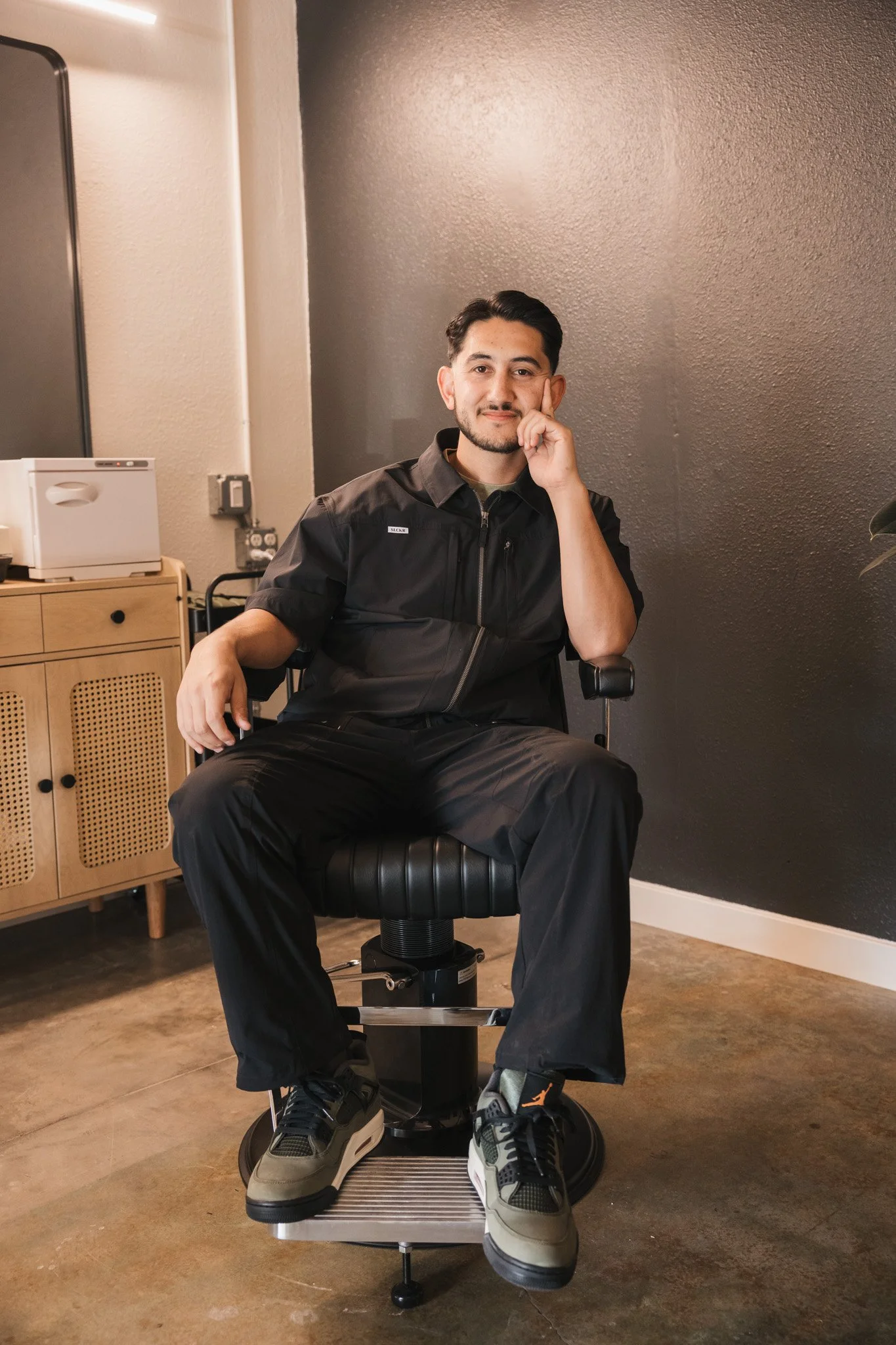
Written by Matthew Mendoza
Licensed barber, educator and consultant based in California. He is passionate about helping barbers pass their barber exam, develop their business and diversify their income. He hosts a podcast, writes a weekly newsletter and offers consulting.